What Makes A Fashion Brand Sustainable? How to calculate the cost per wear of your garments.
With so many fashion brands claiming that their garments are ethically made, sustainably manufactured and created with planet-friendly materials, it’s difficult to know which brands you can trust. Don’t worry, we’re going to explain exactly what makes a fashion brand sustainable so that you know where to buy your clothes.
What exactly is sustainable fashion?

Over the last few years, sustainable fashion has become an incredibly popular term and the danger with this is that companies can use it incorrectly as an attempt to showcase their brand. The first thing that anyone interested in the world of fashion needs to know is exactly what sustainable fashion is.
“In practice, this implies continuous work to improve all stages of the product’s life cycle, from design, raw material production, manufacturing, transport, storage, marketing, and final sale, to use, reuse, repair, remake and recycling of the product and its components.”
According to Dr. Anna Brismar in her 2014 piece “What is Sustainable Fashion?” Sustainable fashion can be defined as “clothing, shoes and accessories that are manufactured, marketed and used in the most sustainable manner possible, taking into account both environmental and socio-economic aspects. In practice, this implies continuous work to improve all stages of the product’s life cycle, from design, raw material production, manufacturing, transport, storage, marketing and final sale, to use, reuse, repair, remake and recycling of the product and its components.”
This essentially means designing and creating fashion that is sustainable in terms of the materials it’s made from and how long it lasts. In this blog post, we’ll be discussing how to assess the longevity of a garment when you’re shopping.
Why is sustainable fashion important?
There are so many reasons why both consumers and companies alike are so invested in sustainable garments. The main reason is often due to the reduced impact that these garments have on the environment.
Sustainably made garments often last longer due to the higher quality materials which are used. The longer an item of clothing can be used, the fewer items overall will end up in the landfill over time which is hugely beneficial for the environment.
It’s important that we keep as many clothes as possible out of the landfill as possible, not only is this wasteful but according to Roadrunner, textiles can take over 200 years to decompose in landfills.
There is some good news though! According to Textile Future, “As the millennial generation gains purchasing power, their high expectations that businesses will operate in a sustainable manner could have a big influence on shopping trends.” (McKinsey, 2016).
One way to generate the change that we want to see is to vote with our money. By investing in sustainable brands and companies who actively play their role in offsetting their environmental impact, we are voting for the companies we want to see thrive as well as setting the standards for new initiatives.
If you want to learn more about our products and how we meet the necessary sustainability guidelines, browse our range of t-shirts, sweatshirts, and polo shirts today.
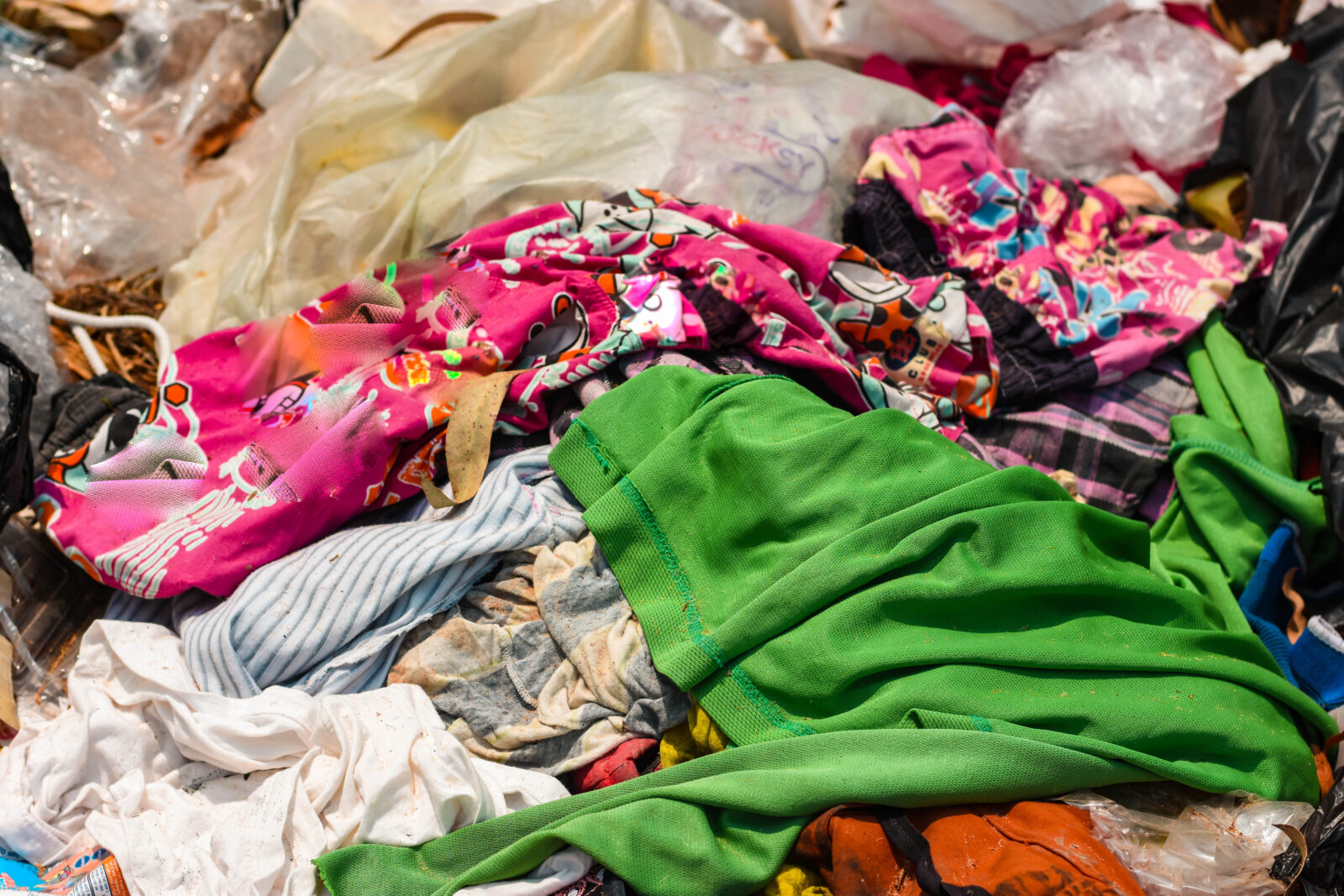
What exactly is fast fashion and why is it damaging?
Now that we understand what sustainable fashion is and why it’s more beneficial to the environment than other ways of manufacturing garments, it’s time to explore exactly what its opponent, fast fashion, is.
“Garment production utilises trend replication and low-quality materials in order to bring inexpensive styles to the public.”
According to The Good Trade, “Fast fashion is a design, manufacturing, and marketing method focused on rapidly producing high volumes of clothing. Garment production utilises trend replication and low-quality materials in order to bring inexpensive styles to the public.”
Put simply, fast fashion is generating high volumes of clothing, by less sustainable means, which can be sold at a low cost.
The damage of fast fashion can be explained easily when you think about our shopping habits. For example, did you know that according to Fixing Fashion: Clothing Consumption and Sustainability, here in the UK, we buy more clothes per person than anywhere else in Europe?
It’s also shocking to think that, according to The Guardian, one in three young women consider garments worn once or twice to be old. This would explain the sheer amount of clothing that is bought each year. The truth is that one of the most sustainable and eco-friendly things you can do is to love the clothes you already have, extend their lives, and only replace them when necessary.
The good news is, that by buying clothing from respected and sustainable brands, you will find pieces that you will love for years to come and won’t be at all tempted to throw them away after a couple of months.
What makes a fashion brand sustainable?
The next question is what makes a fashion brand or even a garment sustainable?
Quality over quantity
One of the first indicators about the sustainability of a brand is the concept of quality over quantity. Sustainable brands will often have fewer items available to purchase than their fast fashion counterparts but their prices will be higher.
Here at Colourways Textiles, we pride ourselves on the high quality of our fabrics and are strong believers that you cannot have luxurious garments unless they are made from the very best materials. To learn more about the fabrics we use, check out our Fabric Lab.
Our clothing is designed and manufactured to last for at least 50 washes which means it will last significantly longer than fast fashion alternatives. With proper care, our garments could last over 100 washes.
It’s also worth noting that our t-shirts will become better with every wash. This is achievable due to the high quality and durable fabrics that we use. Keep reading to learn more about how to assess the longevity of your garments with the cost per wear calculation.
Environmental impact from manufacturing
You may have noticed that sustainable brands will often have an initiative in place to minimise their impact on the environment, it could be planting a tree for every purchase made, using recyclable/compostable packaging or donating a set amount of their profits to an environmentally friendly cause.
For example, here at Colourways, we plant a tree for every purchase that is made. We work with Milkywire which means that we donate one Mangrove tree for every sale that we make to FoProBiM, a non-governmental organisation based in Haiti. Make sure you’re following us on social media to get regular updates on this incredible scheme.
Longevity
Sustainably made garments are designed with longevity in mind. This is why higher quality materials are used because by design they are made to last and survive being laundered and the general wear and tear of life. With that idea in mind, a wardrobe made up of sustainably made items is less resource-intensive as fewer items will need to be purchased over time.
How to work out the cost per wear of an item?
You might have heard the term ‘cost per wear’ thrown around before in the fashion world. This figure is a great way to assess not only how much value an item has to you, but also whether it is a worthy investment.
When it comes to fashion and the clothes we wear, ideally we want the cost per wear of our clothing to be low, as this means that the item is high quality enough to last a long time (reducing our need to over-purchase).
To work out the cost per wear of an item, you simply divide the price of the item by the number of times you have worn it (or think you could potentially wear it).

With this idea in mind, we can also extend the cost per wear of our clothes by taking good care of them and mending/fixing them when needed. This is a much easier process when the item you have purchased was high quality to begin with.
According to the report Fixing Fashion: Clothing Consumption and Sustainability, extending the life of clothing by an extra nine months could reduce carbon, waste and water footprints by around 20–30% each.
For instance, did you know that increasing the life of your garment is one of the most effective means of reducing their environmental footprint? According to the report Fixing Fashion: Clothing Consumption and Sustainability, extending the life of clothing by an extra nine months could reduce carbon, waste and water footprints by around 20–30% each.
Comparing fast fashion to sustainable fashion
When we look at fast-fashion, it’s easy to be tempted by the low cost of the item, the trick is to look beyond this. For example, you pick up a shirt in a highstreet shop, and let’s say it’s £21, what you might not realise then and there is that you might not be able to wear the item 10 times before you see signs of wear. If this is the case, you can work out the cost per wear by dividing the price of the item by the number of times you can or could potentially wear it.
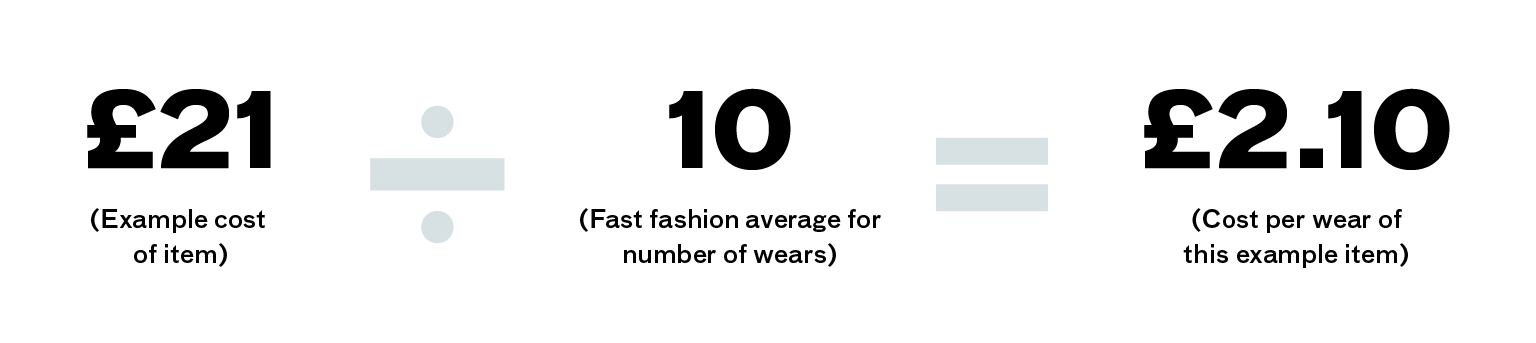
If we take an example of a more sustainable brand, such as ourselves, and do the same calculation, the results will be very different.
Let’s take our Supima Cotton T-Shirt which can be purchased for £45. If you divide this by 10 (the fast fashion average we used above), it works out at £4.50 per wear. However, the beauty of the high-quality nature of the fabrics we use means that you will get far more than 10 wears out of our items.
With the proper care and maintenance, our shirts will last you for at least 100 wears, (for example, 50 washes – one wash after every 2 wears) resulting in an even better cost per wear value of £0.45.
Plus, due to the high-quality nature of the fabrics that we use, our clothing actually has the potential to last over 100 washes meaning the cost per wear of our garments could potentially be even lower!
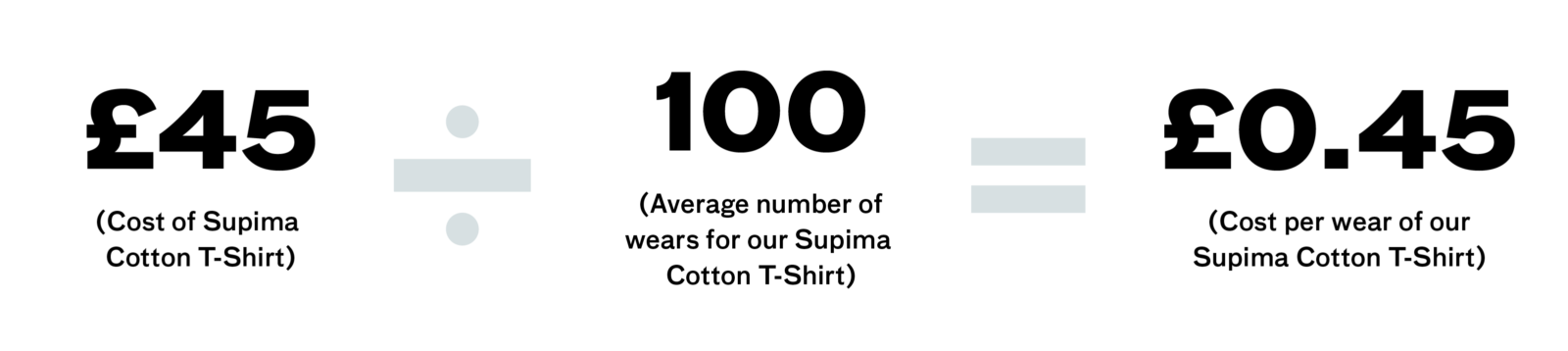
Needless to say, buying high-quality fashion made from durable materials is cheaper financially in the long run as less maintenance/replacements are needed. This is before we even consider the cost to the environment.
In terms of working out the cost per wear of a garment whilst you’re shopping, it’s all a matter of opinion.
You need to ask yourself how many times you imagine you will wear a garment, for instance, you’ll wear a pair of jeans more than a cashmere jumper. Then make a judgement call about whether the price of a garment marries up with how many times you imagine you will wear a garment. For example, a £35 t-shirt that you can see yourself wearing every day, from brunches to evenings out will have a low cost to wear as you will be wearing it a lot in relation to how much it initially cost.
Think of it this way, simply divide the cost of the item by how many times you can picture yourself wearing it (and be honest with yourself – this will make the results more accurate).
How to curate a more sustainable wardrobe?
The most important thing to note is that creating a more sustainable wardrobe is not about throwing out what you have in order to replace it with more sustainable garments. This would be incredibly wasteful and not environmentally friendly at all.
The most sustainable thing you can do is to love the clothes that you have by taking good care of them and only replacing them with sustainably made garments when they can no longer be worn.
The average piece of clothing will be worn seven times before getting thrown away, according to a 2015 study by Barnardo’s so it’s important that we do our bit to extend the lives of our favourite garments.
Here are some top tips for curating a more sustainable wardrobe:
- If you’re on a budget, check out second-hand clothing – these pre-loved pieces will be a great addition to your wardrobe
- When you do want to buy new, opt for a brand you can trust, like us
- Learn how to do basic repairs on your clothes, or find someone who would be happy to help
If you like the sound of these tips, check out our blog post about how to create a more sustainable wardrobe as it’s packed full of advice that will help you wherever you are in your journey.
To conclude
When it comes to the war between fast and sustainable fashion, it’s important to remember that consumers have the power to make sustainable fashion choices. With this idea in mind, if you’re looking to create a more environmentally friendly wardrobe, having the right brands by your side when you need them is key.
The key message is to love what you have, then when it needs replacing, go for a brand that is planet-friendly – both your wallet and Mother Nature will thank you.
If you have any questions about who we are or what we do, feel free to get in touch with us and we’d be more than happy to answer your questions.